Culturally appropriate AI solutions for Aboriginal and Torres Strait Islander organizations. Supporting community services, land councils, health services, and Indigenous enterprises across Australia.
We understand the unique pain points facing Australian indigenous community organizations businesses
Complex funding applications requiring cultural context and community consultation documentation
Service delivery across remote communities with limited technology infrastructure
Cultural knowledge preservation and language documentation requiring specialized tools
Compliance reporting to multiple government departments time-consuming
Community engagement and consultation tracking difficult across large geographic areas
Elder and cultural authority involvement in decision-making needing coordination
Limited technology resources and digital literacy support
Balancing cultural protocols with modern administrative requirements
Intelligent AI agents that work 24/7 to transform your business operations
Culturally appropriate system managing government reporting, funding acquittals, and compliance while respecting Indigenous governance
Expected ROI:
Reduce reporting time by 60%, maintain 100% compliance, demonstrate cultural appropriateness
System coordinating community consultations, Elder input, and stakeholder engagement across remote locations
Expected ROI:
Improve community engagement 70%, streamline consultation, respect cultural protocols
Specialized system for Indigenous-specific funding including NIAA, IAS, and philanthropic opportunities supporting First Nations
Expected ROI:
Access 3x more funding opportunities, improve success rates 50%, reduce application time 70%
AI-powered system preserving cultural knowledge, languages, and storytelling for future generations
Expected ROI:
Preserve cultural knowledge, support language revival, engage younger generations
Streamline your operations with intelligent automation
Automated tracking of community services, health programs, and cultural activities with culturally appropriate reporting.
Time Saved
20 hours per week on admin
Impact
Serve 40% more community members, demonstrate impact effectively
Multi-channel communication system supporting Indigenous languages, remote areas, and cultural protocols.
Time Saved
15 hours per week on communications
Impact
Reach 3x more community members, respect cultural communication
Automated reporting to NIAA, health departments, and funders with cultural context and community outcomes.
Time Saved
25 hours per month on reporting
Impact
Maintain funding compliance, demonstrate community benefit
Digital management of cultural sites, artifacts, stories, and knowledge with appropriate access controls.
Time Saved
10 hours per week on documentation
Impact
Preserve culture, support tourism, protect sacred sites
Comprehensive AI and digital solutions for indigenous community organizations businesses
Build AI respecting Indigenous culture, protocols, and community governance
Benefits:
Custom portals for community services, cultural programs, and member engagement
Benefits:
Increase awareness of Indigenous services and cultural programs
Benefits:
Websites honoring Indigenous design, storytelling, and cultural protocols
Benefits:
Real outcomes from Australian indigenous community organizations businesses
NT Aboriginal organization doubled funding with AI-assisted applications
QLD Indigenous health service reached 5x more remote community members
NSW land council reduced government reporting time by 70% with automation
WA Indigenous organization digitally preserved 200+ Elder stories and language
SA Aboriginal community services served 60% more clients with same staff
All Indigenous clients maintain 100% funding compliance with AI systems
Everything you need to know about AI automation for indigenous community organizations
AI can support Aboriginal and Torres Strait Islander organizations when designed and implemented with cultural respect, community governance, and Indigenous self-determination at the center. The key is AI serving Indigenous communities on their terms, respecting cultural protocols, and amplifying rather than replacing Indigenous knowledge and decision-making. Culturally appropriate AI for Indigenous organizations includes compliance and reporting automation that reduces administrative burden on limited staff while maintaining government funding requirements, freeing more time for community-facing programs and cultural work. Community engagement systems coordinate Elder consultation, community meetings, and stakeholder input across large geographic areas and remote communities, documenting cultural decision-making processes that funders and governments increasingly require.
Indigenous funding and grant AI identifies opportunities from NIAA (National Indigenous Australians Agency), IAS (Indigenous Advancement Strategy), health departments, and philanthropic programs specifically supporting First Nations, generates applications incorporating cultural context and community consultation, and tracks milestones satisfying funder reporting while demonstrating community benefit and cultural appropriateness. Cultural knowledge preservation AI records and transcribes Indigenous languages, preserves oral histories and stories, manages cultural heritage documentation, and creates language learning tools - supporting language revival and cultural maintenance for future generations while respecting protocols around sacred knowledge and intellectual property belonging to specific clans or families. Service delivery automation tracks programs reaching remote communities, coordinates health services and cultural activities, and demonstrates outcomes to funders while maintaining community control and governance. For Aboriginal and Torres Strait Islander organizations across NT, QLD, NSW, WA, SA, VIC, and TAS, culturally respectful AI typically saves 25-40 hours weekly on government reporting and administration enabling focus on community and culture, increases funding by 50-150% through improved grant applications and compliance, extends service reach to more remote community members through operational efficiency, preserves cultural knowledge and language that might otherwise be lost, and maintains Indigenous governance and self-determination while navigating complex government and funding requirements - technology serving communities rather than imposing external systems or processes contrary to cultural protocols and Indigenous ways of working.
Culturally appropriate AI for Aboriginal and Torres Strait Islander communities requires Indigenous community governance, cultural protocol respect, and design centering Indigenous knowledge and ways of working rather than imposing Western systems. Key principles include Indigenous data sovereignty where communities control their data, determine who accesses it, and decide how it is used consistent with Indigenous cultural and intellectual property rights. Cultural protocol integration ensures AI systems respect community decision-making processes including Elder consultation, gender-specific cultural business, sorry business protocols, and appropriate handling of cultural knowledge some of which is sacred, secret, or clan/family-specific not for general sharing. Language and communication support enables AI to work with Indigenous languages, understand cultural communication styles different from mainstream Australian English, and support remote communities with varying technology access and digital literacy.
Community control and governance ensures Indigenous organizations own and direct technology rather than external vendors imposing systems, with flexibility adapting to each community and nation unique cultural protocols and governance structures. Outcome measurement respecting Indigenous definitions of success, community wellbeing, and cultural strength rather than only Western metrics of service efficiency. NT land councils, QLD Indigenous health services, NSW Aboriginal community organizations, and WA cultural centers using culturally appropriate AI report technology that genuinely supports rather than disrupts Indigenous ways of working, systems that community Elders and members actually use because they respect cultural protocols, improved compliance and funding demonstrating to government that communities are well-governed and accountable, and successful engagement with younger generations through culturally grounded technology familiar to them. Implementation requires meaningful consultation with Elders and community, Indigenous staff and advisor involvement in design and configuration, training delivered in culturally appropriate ways with ongoing support, and flexibility adapting systems to specific community and nation rather than one-size-fits-all approaches that fail in diverse Indigenous contexts.
Particularly important given history of technology and systems imposed on Indigenous communities without consultation often failing because they don not respect cultural protocols, community governance, and Indigenous knowledge systems fundamentally different from mainstream Australian organizations that most technology assumes and requires.
Yes, AI can significantly improve success with NIAA (National Indigenous Australians Agency), IAS (Indigenous Advancement Strategy), and other government funding for Aboriginal and Torres Strait Islander organizations through specialized grant assistance understanding Indigenous funding unique requirements. Government funding for Indigenous organizations including NIAA grants, health department programs, state/territory Indigenous programs, and philanthropic trusts supporting First Nations requires demonstrating community consultation and Elder input, showing cultural appropriateness of proposed programs, documenting governance and organizational capacity, explaining how programs benefit Indigenous community members, and navigating complex application requirements often more demanding than mainstream grants due to historical accountability concerns. Indigenous funding AI identifies relevant opportunities from federal, state, and philanthropic sources specifically for First Nations organizations and communities, analyzes grant criteria understanding Indigenous-specific requirements around cultural protocols, community consultation, and Indigenous governance, generates application responses incorporating community context, consultation documentation, and cultural appropriateness, assists with budgets and project plans respecting community decision-making and cultural priorities, manages Elder and community consultation documentation increasingly required by funders, and tracks milestone reporting demonstrating community outcomes and cultural benefit satisfying funders while maintaining community control. NT Aboriginal organizations and QLD Torres Strait Islander communities using funding AI report reducing application time from 60-100 hours to 15-25 hours while improving cultural appropriateness and community voice, increasing applications from 3-5 annually to 12-20 through time savings enabling pursuit of more opportunities, improving success rates from 15-25% to 50-70% through better quality and compliance with Indigenous-specific requirements, winning $200,000-$800,000 additional annual funding from increased applications and success, and maintaining community governance and Elder oversight throughout application and program delivery versus external consultants writing applications disconnected from community.
The system understands NIAA program areas including children and schooling, jobs land and economy, safety and wellbeing, culture and capability, and remote Australia strategies. NSW land councils use AI for native title and land management grants. WA Aboriginal health services leverage AI for commonwealth and state health funding. SA Indigenous organizations deploy AI for cultural heritage and language preservation grants.
Integration with community consultation processes ensures Elder input and community decisions are documented and incorporated rather than AI making decisions contrary to cultural protocols. Particularly valuable for small-to-medium Aboriginal organizations without dedicated grant writers where writing applications consumes leadership time better spent on community programs and governance, remote communities where consultants are expensive and disconnected from community context, and organizations building funding sustainability through successful diversified funding portfolio that AI enables through increased application capacity while maintaining cultural appropriateness and community control essential for Indigenous self-determination in complex Australian Indigenous funding environment.
AI solutions for Aboriginal and Torres Strait Islander organizations typically cost $600-$2,500 per month with special Indigenous pricing, government technology grants, and in-kind support often available making technology affordable even for small communities. Basic packages ($600-$1,200/month) include service delivery tracking and government reporting. Mid-tier packages ($1,500-$2,000/month) add community engagement, funding assistance, and compliance management. Enterprise solutions ($2,500+/month) include cultural knowledge preservation, language tools, and multi-community coordination.
Many technology providers including AI Lab Australia offer 40-60% discounts for Indigenous organizations, free/subsidized implementation for small Aboriginal communities, and assistance accessing federal and state Indigenous technology grants including NIAA digital transformation funding, state government Indigenous digital inclusion programs, and philanthropic trust technology support. Initial setup ranges from $3,000-$10,000 but grants and community contributions often cover costs. NT Aboriginal land councils, QLD Torres Strait health services, NSW community organizations, WA cultural centers, and SA Indigenous enterprises typically see ROI within 4-8 months through increased funding and operational savings. A typical Aboriginal organization with $800K-$2M budget (common for medium Indigenous organizations) can increase funding by $150,000-$400,000 annually through improved grant success winning 3-6 additional applications at $30K-$80K each, improved compliance maintaining existing funding that might be at risk without proper reporting systems, and enhanced service delivery demonstrating outcomes that secure ongoing government support.
Cost savings include reducing external consultants for reporting and applications ($25K-$50K saved), freeing leadership time from administration to community programs and governance (opportunity cost $20K-$40K), and improving program efficiency serving 30-50% more community members with same resources. Flexible payment options include graduated pricing as organizations grow, payment from grant administration budgets, and community technology funds. Special consideration for remote communities with limited budgets and infrastructure including reduced pricing, offline-capable systems, and community-appropriate training and support. Particularly affordable for Indigenous organizations when technology proves itself through increased funding and community benefit, providers understand Indigenous funding cycles and payment constraints, and government and philanthropic sectors increasingly recognize technology investment as legitimate and necessary expense for Indigenous organizations building governance and service delivery capacity essential for community wellbeing and self-determination in Australian Indigenous sector where organizations historically underfunded and under-resourced compared to mainstream Australian organizations yet expected to meet same or higher reporting and compliance standards.
AI provides powerful tools for Aboriginal and Torres Strait Islander communities preserving cultural knowledge, languages, and storytelling for future generations when implemented with appropriate cultural protocols and community control. Cultural knowledge and language preservation for Indigenous communities faces challenges including aging Elders holding oral histories and language knowledge at risk of being lost, limited documentation of languages some with few remaining fluent speakers, younger generations disconnected from traditional culture and language, and need for culturally appropriate digital tools respecting sacred knowledge and intellectual property rights. Cultural knowledge preservation AI records and transcribes Indigenous languages using speech recognition trained on specific language phonetics and sounds different from English, captures oral histories and storytelling in Elder voices preserving not just words but cultural context and delivery, documents cultural practices, songs, and ceremonies with appropriate access controls respecting gender-specific knowledge and sacred content, creates interactive language learning tools and apps engaging younger community members, manages cultural heritage information including sites, artifacts, and traditional country knowledge, and enables knowledge sharing within community and beyond where appropriate with permissions and protocols maintained. NT language centers and QLD Torres Strait Islander communities using cultural preservation AI report recording and preserving 100-300 hours of Elder language and stories annually compared to minimal documentation previously, developing language apps and learning resources engaging 50-200 younger community members in language revival, creating searchable cultural knowledge databases accessible to community while protecting sacred and restricted content, and building digital archives ensuring cultural knowledge survives for future generations even as Elders pass.
The technology respects Indigenous cultural protocols including gender-restricted knowledge accessible only to appropriate community members, sacred information protected from public access, clan or family-specific knowledge controlled by relevant authority not shared broadly, and clear ownership that cultural intellectual property belongs to community not external organizations. WA Aboriginal language centers use AI for endangered language documentation and revival programs. NSW land councils leverage AI for traditional owner knowledge about country, sites, and practices. SA Indigenous organizations deploy AI for cultural education programs and community engagement.
Integration with existing language programs, cultural centers, and education initiatives ensures technology complements rather than replaces community-led cultural work. Provides younger generations with digital tools they relate to while maintaining Elder authority and cultural protocols - bridging traditional knowledge with contemporary technology. Particularly urgent for Indigenous communities with endangered languages at critical risk, organizations pursuing cultural revival and strengthening programs, and communities wanting to pass cultural knowledge to younger generations in engaging contemporary formats while maintaining cultural integrity, protocols, and Indigenous control essential for cultural survival and thriving in modern Australia where Indigenous cultures and languages require active preservation and revival after historical suppression and loss.
AI significantly reduces government compliance and reporting burden for Aboriginal and Torres Strait Islander organizations through automated data collection, culturally appropriate documentation, and efficient report generation while maintaining Indigenous governance and community control. Government compliance for Indigenous organizations involves reporting to NIAA on IAS program milestones, health department reporting on medical services and programs, state/territory Indigenous affairs department requirements, commonwealth department-specific reporting for education, employment, housing programs, and demonstrating cultural appropriateness, community consultation, and Indigenous governance - overwhelming small organizations with limited administrative capacity. Compliance and reporting AI automatically tracks service delivery and program activities throughout the year versus scrambling at deadline, captures participant outcomes and community benefit data demonstrating program effectiveness, documents community consultation, Elder input, and cultural decision-making processes increasingly required by funders, generates government reports in required formats auto-populating forms and attachments, maintains audit trail of activities and expenditure satisfying accountability requirements, and alerts to upcoming deadlines and missing information enabling timely submission. NT Aboriginal community organizations and QLD Indigenous health services using compliance AI report reducing reporting time from 30-50 hours monthly to 8-12 hours through automation, achieving 100% on-time submission versus occasional late reports risking funding, maintaining complete documentation for audits and reviews without staff panic, demonstrating community outcomes and cultural appropriateness effectively to funders, and freeing staff to focus on community programs and cultural work rather than endless administrative paperwork.
The system understands Indigenous-specific reporting including NIAA outcome frameworks focusing on Indigenous wellbeing and community benefit, health department reporting on Aboriginal and Torres Strait Islander health outcomes, and state government reporting on Closing the Gap targets and Indigenous program effectiveness. NSW land councils use AI for native title and land management reporting. WA cultural centers leverage AI for heritage protection and tourism program reporting. SA Aboriginal housing organizations deploy AI for commonwealth and state housing program compliance.
Integration with community governance ensures cultural authority and Elder oversight of reports and data sharing, respecting protocols about information some of which may be culturally sensitive or community-specific not for broad sharing. Provides management and board with oversight of organizational performance, program effectiveness, and funding compliance supporting good governance and accountability to community. Particularly essential for Aboriginal organizations managing 5-15 concurrent funding agreements each with different reporting requirements and deadlines, small communities where executive director or CEO spends 40-60% of time on reporting versus community leadership, and remote organizations where compliance burden prevents program expansion and service improvement - AI enables professional administration and reporting meeting government expectations while maintaining community control and cultural appropriateness essential for Indigenous self-determination and sustainable funding in Australian Indigenous sector where government accountability requirements continue increasing without proportional administrative funding creating impossible burden on already stretched Indigenous community organizations.
Yes, AI solutions can support remote Aboriginal and Torres Strait Islander communities when designed for limited infrastructure including unreliable internet, basic devices, and varying digital literacy. Remote Indigenous communities across NT, regional QLD, remote WA, far north SA, and APY lands face technology challenges including intermittent or slow satellite internet making cloud systems difficult, limited devices often shared between community members and staff, power supply constraints and unreliable electricity in some communities, varying digital literacy from tech-savvy younger people to Elders unfamiliar with computers, and need for systems working offline then syncing when connection available. Remote-capable AI for Indigenous communities includes offline functionality allowing systems to work without internet and sync when connection available, mobile-first design working on phones and tablets not just computers since mobile devices more common in remote communities, low-bandwidth optimization minimizing data usage critical where internet is expensive or slow, voice and visual interfaces reducing reliance on text for users with varying English literacy or reading skills, and simple intuitive design appropriate for varying technology experience and comfort. The technology includes automated SMS communications reaching community members via mobile phones universal even in remote areas, offline mobile apps for field workers and service delivery staff working in community without connectivity, local server installations in larger communities providing faster access and offline capability, and solar-power-aware systems that function within power constraints of remote areas.
NT Aboriginal remote community organizations and QLD Cape York services using remote-appropriate AI report technology that actually works in their context versus city-designed systems failing in remote conditions, staff and community members able to use systems without constant troubleshooting, improved service delivery tracking and reporting despite infrastructure limitations, and successful engagement with community in remote locations who previously could not access or benefit from digital services. Implementation includes in-community training visiting remote locations to teach staff hands-on rather than expecting online learning, ongoing technical support understanding remote challenges and constraints not frustration at "technology not working" when infrastructure is the issue, and culturally appropriate training methods respecting community learning styles and Elder authority. WA remote health services use offline mobile health apps syncing patient data when returning to clinic. NT land councils leverage low-bandwidth systems for remote ranger and culture programs.
SA APY lands organizations deploy SMS-based community communications working with basic phones. Integration considers remote realities like staff turnover, limited IT support, and need for simple systems that continue working when designer/vendor leaves community. Particularly important for remote Aboriginal communities where mainstream technology consistently fails due to infrastructure and context mismatches, organizations serving remote populations requiring field-based service delivery, and Indigenous communities where technology exclusion and digital divide risk further marginalization - appropriate technology enables remote Indigenous Australians to benefit from digital opportunities while respecting remote community realities and constraints in Australian Indigenous sector where remote communities are most underserved yet have greatest need for technology supporting service delivery, cultural programs, and economic development essential for community sustainability and self-determination in challenging remote Australian contexts.
Successful Aboriginal and Torres Strait Islander organizations across Australia use culturally appropriate AI combining compliance automation, community engagement, and cultural preservation while maintaining Indigenous governance and control. Top-performing Indigenous organizations implement culturally appropriate compliance and reporting AI reducing government reporting burden by 60-70% while maintaining funding, community engagement systems coordinating Elder consultation and community input across remote areas respecting cultural protocols, Indigenous funding and grant AI improving application success from 20% to 60%+ and accessing 3x more opportunities, service delivery tracking demonstrating community outcomes and program effectiveness to funders and government, cultural knowledge and language preservation AI recording and maintaining Indigenous languages and stories for future generations, automated community communications in language and culturally appropriate formats reaching remote members, and governance and decision-making documentation supporting Indigenous organizational management and accountability to community. NT Aboriginal land councils and health services, QLD Torres Strait Islander communities, NSW Aboriginal community organizations, WA cultural centers, and SA Indigenous enterprises using comprehensive culturally appropriate AI report 80-150% funding increase through improved grants and compliance maintaining existing support, 30-50 hours weekly saved on administration enabling community-facing programs and cultural work, service delivery expansion reaching 40-80% more community members with same resources, successful cultural preservation and language revival engaging younger generations, and improved governance and accountability demonstrating to government and funders that communities are well-managed and deserving ongoing investment. The most successful Indigenous organizations ensure technology serves community priorities and cultural values rather than imposing external systems, maintain Indigenous control and governance over technology and data, integrate cultural protocols and Elder authority into systems, and build internal capacity among Indigenous staff to manage and adapt technology rather than depending on external vendors.
Remote communities use offline-capable mobile systems working despite infrastructure limitations. Health services leverage culturally appropriate patient management respecting kinship, cultural business, and Indigenous wellbeing concepts. Land councils deploy cultural heritage and traditional owner systems protecting sacred knowledge. Language centers use AI for endangered language documentation and revival.
Integration between systems ensures holistic organizational management while respecting diverse programs and cultural activities Indigenous organizations coordinate. Particularly powerful for Indigenous organizations building organizational capacity and sustainability, communities pursuing self-determination and reduced reliance on external consultants and services, and First Nations wanting technology supporting rather than undermining cultural strength, language, and identity in contemporary Australia where Indigenous organizations increasingly sophisticated and expecting technology solutions respecting their culture, governance, and community rather than imposing mainstream Australian organizational models inappropriate for Indigenous contexts, priorities, and ways of working that AI Lab Australia and similar providers must understand and honor in serving Aboriginal and Torres Strait Islander communities and organizations across Australian states and territories.
See how we've helped indigenous community organizations businesses succeed
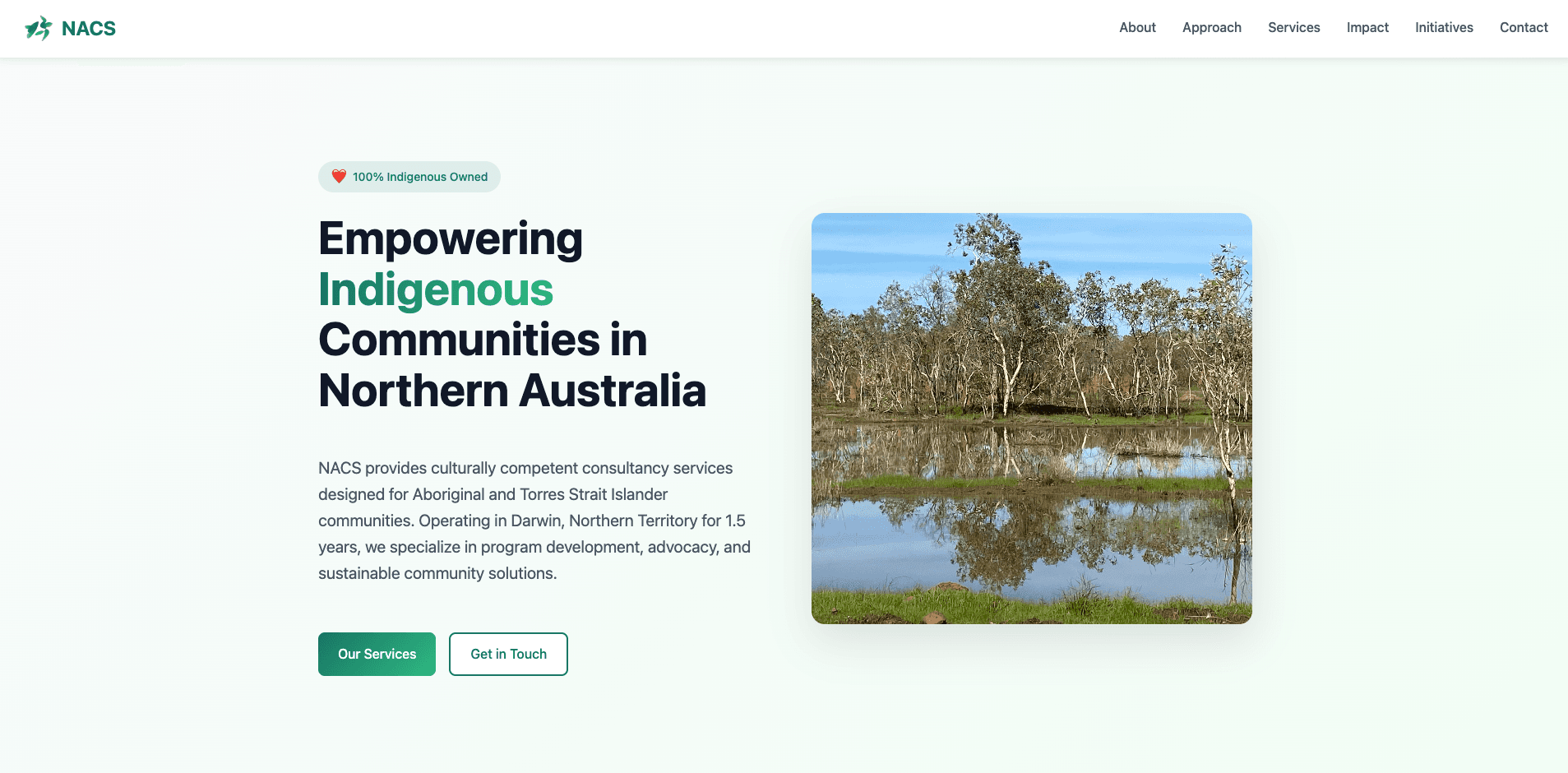
Website for Aboriginal and Torres Strait Islander community consultancy in Darwin, NT with culturally respectful design and branding
View Case Study→We work with businesses in major Australian cities and regional areas
Get a free consultation with special Indigenous community pricing and support. See how AI can reduce reporting burden, increase funding, and preserve culture while respecting Indigenous governance and protocols.
Get Your Free Consultation→